Ziarat Guides
How to Perform Umrah: A Step-by-Step Guide for First-Time Pilgrims
From entering Ihram at the Miqat to the final Halq or Taqsir — a calm, clear walkthrough of every stage of Umrah, with what to say and what to avoid.
Ziarat guides رهنمائی
Clear, respectful guides to Umrah, Hajj and ziarat — so that when you arrive, your heart can be on worship rather than logistics.
Umrah at a glance
إحرام
Enter the sacred state at the Miqat with intention and the Talbiyah.
طواف
Seven circuits around the Kaaba, beginning at the Black Stone.
سعي
Seven laps between Safa and Marwah, ending at Marwah.
حلق أو تقصير
Shave or shorten the hair — Umrah is complete.
The days of Hajj
An overview of the main rites in order. Details vary between schools of fiqh — follow your group’s scholar and the step-by-step Hajj guide in the app.

Enter Ihram and travel to Mina.
Stand at Arafat until sunset; spend the night at Muzdalifah.
Stone Jamrat al-Aqabah, offer the sacrifice, shave or trim, and perform Tawaf al-Ifadah and Sa’i.
Stay in Mina and stone the three Jamarat each day.
Start here
From entering Ihram at the Miqat to the final Halq or Taqsir — a calm, clear walkthrough of every stage of Umrah, with what to say and what to avoid.
Ihram, documents, health essentials and the small things pilgrims wish they had brought — a checklist built from real pilgrim experience.
How to arrive, how to greet the Prophet ﷺ with adab, how Rawdah visits work today, and finding stillness in a busy mosque.
Getting a local SIM, handling riyals, saving emergency numbers and keeping your guides available when the network is busy.
Questions
Short answers to the questions pilgrims ask most. For rulings, please consult a qualified scholar.
Hajj is the annual pilgrimage performed in Dhul Hijjah. It is a pillar of Islam, obligatory once in a lifetime for every adult Muslim who is physically and financially able. Umrah can be performed at any time of year and is shorter, consisting mainly of Ihram, Tawaf, Sa’i and Halq or Taqsir.
No. Visiting Masjid an-Nabawi is not a rite of Hajj or Umrah, but it is a highly recommended visit, and most pilgrims spend several days in Madinah before or after their pilgrimage.
Permits for Umrah and for visiting the Rawdah are currently issued through the official Nusuk platform. Requirements change between seasons, so always check the latest official guidance before you travel.
Yes. According to its Google Play listing, Ziyarat-e-Haramain works fully offline once installed — including the guides, duas, prayer times, Qibla and Quran.
The app is built in Urdu and English, with duas shown in Arabic alongside Urdu and English translation.
No. Ziyarat-e-Haramain is an independent guide and is not affiliated with the Saudi Ministry of Hajj and Umrah or the Nusuk app.
Free on Google Play & App Store
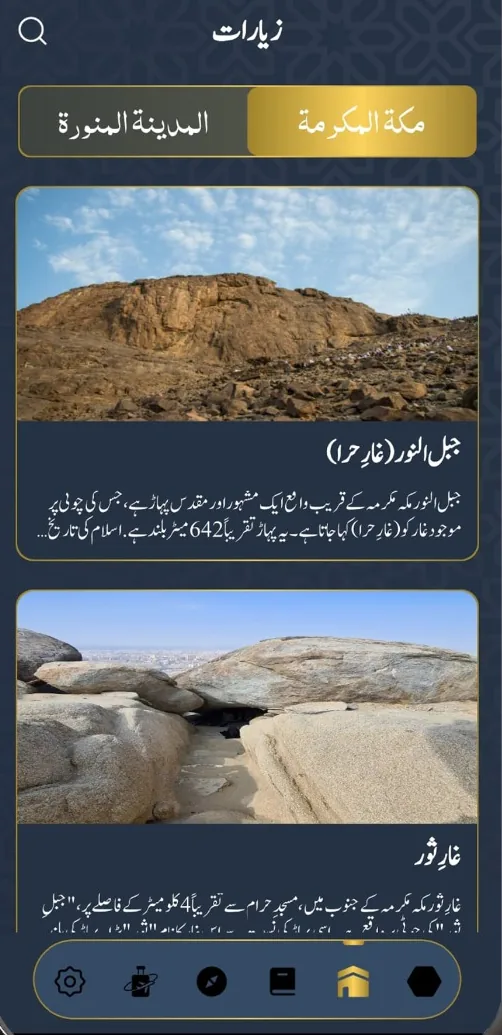
Discover sacred places, explore meaningful destinations, and access helpful Ziarat information wherever your journey takes you — even when you are offline inside the Haramain.